Monday, 5 March 2012

Lakhs together pilgrims visiting Sri Kshetra Dharmasthala every year. The are many ancient temples are hidden in the villages near Dharmasthala. But the visitors of the Dharmasthala are not have enough details of these temples. here we listed some of the temples near dharmasthala. 


1) Sri Sadashiva Rudra Temple: 
This temple located in Suriya Village,near Dharmastala is one among them. Manly dedicated to Lord Shiva, the temple has got a unique tradition of offering clay sculptures to God. Generally people offer money or gold to God when their wishes are fulfilled as a symbol of gratitude, but in this temple people make clay offerings to the God.The Suriya temple is probably only one of its kind because of its unique tradition of clay offerings. 

Devotees pray god for their wishes/desires.Once it is fulfilled the devotees along with their clay offerings have to go to the temple preferably on Mondays along with a coconut and a kg of rice.The offerings are available in temple premises which are clay sculptures of your requests.For example chair and table symbolizes job, marriage means small sculptures of bride and groom, human body parts like ear,eyes,heart etc. You can also see children, cradles, limbs, houses, automobiles, coconuts, cattle,eggs, computer,watch,aeroplane etc.., this list is probably endless.

Here is a small tank near by the temple.All the clay offerings are made in a separate place called Mannina Harake Bana ( Clay Offerings Place) which is close to temple.You can see a huge collection of clay sculptures there. ts believed that temple is around 700 years old.But no one in the temple knows the importance behind this clay offerings.
Clay is within the tradition of India.We make ganesha idol,durga mata idol(usually in West Bengal) and many more using clay.So clay must be pure and good compared to anything and I believe god likes to get clay offerings.
How to Reach :
Suriya is around 12km from Dharmastala,which has good connectivity from all parts of Karnataka.You can hire a jeep or auto from Dharmastala to get in to the place.
Temple timings : 7 30AM to 2PM and 4PM to 6.30PM.
Address of the temple :
Administrator. Sri Sadashiva Rudra Temple
Surya, Nada Grama, Permanu. Beltanagday Tq, DK-574214. 
2) Shishileshwara Temple, Shishila


The Shishileshwara temple is situated on the banks of Kapila River in Shishila village of Belthangady Taluk, Dakshina Kannada district.

The history of Shishileshwara temple dates back to 700 years. This place is also referred as Matsya Theertha. The Mahashir (in Tulu 'Peruvelu') fish is found in huge numbers in the Kapila river.

The fish in the Kapila River at Shishila are believed to be sacred and Naivedyam is offered to them after offering daily pujas. It is also believed that one can get rid of all types of skin disease after worshipping at Shishileshwara temple and feeding the fish in Kapila River.

The other attractions of this place are two rocks, 'Huli Kallu' (rock named after tiger), and 'Dana Kallu' (rock named after cow). It is believed that, a tiger and a cow reached the river and tiger chased the cow. To avoid violence, Shishileshwara converted tiger and cow into rocks. These rocks are also worshipped during the annual festival.

The annual festival at Shishila is held at the end of May and celebrated for 9 days with unique feature in each day.

Note: Fishing is restricted in Kapila River in and around 2 kilometers from Shishileshwara temple.

Distance from Shishila
Mangalore: 110 km
Dharmasthala: 30 km
Belthangadi: 45 km
Kokkada: 15 km

How to Reach
From Beltangady one has to travel via Uppinangady (which is located at National Highway 48) and Kokkada. One has to cross the river to reach Shishila.

Few Buses also ply to Shishila from Uppinangadi and Dharmasthala.


3) Sowthadka Mahaganapathi Temple

This temple is just 20km away  Dharmasthala,. It is unique in the sense that it has no temple structure. 

Pooja Timings : 7:15 am, 12:15 pm, 7:15 pm


Distances to Sowthadka from major places:
Dharmasthala: 20 km. Kukke Subrahmanya: 45 km
Mangalore: 82 km

How to reach Sowthadka by Road: One can reach Southadka, on the National Highway 48(Mangalore-Bangalore) from Uppinangady towards Bangalore, first left turn after Nellyadi, on Dharmasthala Road.

For more info on the temple, you can visit the temple website
Sowthadka Temple

Temple Address:
Southadka Sri Maha Ganapathi Kshetra, Kokkada Post,
Belthangadi Taluk, Dakshina Kannada district Pin code: 574 198
Ph: 08251 - 254 351, 254 161

More Temples in Belthangadi Taluk
  • Shri Janardhana Temple, ujire,
  • Shri Ananteshwara Temple, Ballamanja,
  • Shri Durgaparameshwari Temple, Mottethadka,
  • Shri Mattur Panchalingeshwara Temple, Charmadi,
  • Shri Umapanchalingeshwara Temple, Appila, Neriya,
  • Shri Gopalakrishna Temple, Bendrala, Thotathady
  • Shri Parashurama Temple, Sanyasikatte, Mundaje,
  • Shri Lakshminarayana Temple, Gundi, Mundaje,
  • Shri Mahaganapathi Temple, Nidigal,
  • Shri Lokanatheshwara Temple, Nidigal,
  • Shri Sadashiveshwara Temple, Pajiradka,
  • Shri Vanadurga Temple, Tangai, Ujire,
  • Shri Santhana Gopalakrishna Temple, Chavadi, Ujire
  • Shri Vaidyanatheshwara Temple, Kokkada
  • Shri Durgaparameshwari Temple, Anar,
  • Shri Mahavishnumurthi Temple, Patrame,
  • Shri Somanatheshwara Temple, Belthangadi
  • Shri Durgaparameshwari Temple, Nala
  • Shri Mahalingeshwara Temple, Karaya
  • Shri Mahalingeshwara Temple, Haleji
  • Shri Panchalingeshwara Temple, Uruvalu,
  • Shri Umamaheshwara Temple, Malengallu,
  • Shri Vishnumurthi Temple, Bandaru,
  • Shri Mahammayi Temple, Kalleri,
  • Shri Gopalakrishna Temple, Uli,
  • Shri Panchadurgaparameshwari Temple, Kakkebeedu,
  • Shri Durgaparameshwari Temple, Parenki,
  • Shri Umamaheshwari Temple, Odilnala,
  • Shri Vishnumurthi Temple, Tenkakarandur,
  • Shri Mahalingeshwara Temple, Balanja
  • Shri Somanatheshwara Temple, Aladangadi,
  • Shri Siddhivinayaka Temple, Aladangadi
  • Shri Durgaparameshwari Temple, Chandkur
  • Shri Mahalingeshwara Temple, shirlal,
  • Shri Lokanatheshwara Temple, Badyaru,
  • Shri Nandikeshwara Temple, Venur,
  • Shri Mahalingeshwara Temple, Venur,
  • Shri Suryanarayana Temple, Naravi,
  • Shri Gopalakrishna Temple, Kurangala, Perinje
  • Shri Durgadevi Temple, Kolli,
  • Shri Gopalakrishna Temple, Sulebettu,
  • Shri Mayamaheshwara Temple, Maya, Belalu,
  • Shri Ganapati Subrahmanyeshwara Temple, Malebettu,
  • Shri Mahalingeshwara Temple, (Kaliya) Kalanja,
  • Shri Panchadurga Temple, Koyyur,
  • Shri Durgaparameshwari Temple, Mundur,
  • Shri Lakshmijanrdhana Temple, Majaru,
  • Shri Subrahmanaya Temple, Kolpadi,
  • Shri Vanadurga Temple, Malebettu, Koyyur
  • Sri Balasubramanyeshwara Temple, Icchur, Ilanthila


Wednesday, 29 February 2012


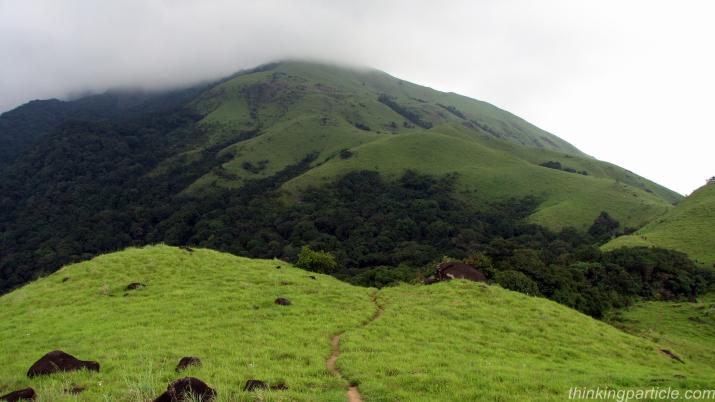
Himavad Gopalaswamy Betta, is a hill (betta in Kannada) located near Gundlupet, Mysore, in the Chamarajanagar district. At a height of 1450m sea level, and is extensively has thick forest It is also the highest peak in the Bandipur National Park. It lies in the core area of the Bandipur National Park and is frequented by wild life including elephants. Dense fog predominates and covers the hills round the year and thus gets the prefix Himavad(in the native language of Kannada) and the temple of Venugopalaswamy (Lord Krishna) gives the full name ofHimavad Gopalaswamy Betta. It is approximately 220 km from Bangalore and 75 km from Mysore on the Mysore Ooty road -10 km away from Gundlupet,which is 60 km away from Mysore. 
View of top of the hill
There is a motorable road all the way to the top of the hill. Entry fee is collected at the forest department checkpost at foot of the hill. Entry fee has been revised wef Feb 01 2011. Entry fee is flat 100 Rs. You have to report back at the entrance after 1 hour. Visitors are allowed from around 8:30am till 5pm. Overnight stay on top is not allowed. Trekking and videography in the surrounding hills are allowed only with prior permission and to be accompanied by the forest department guides. There is a forest department guest house at the top of the picturesque hill, which can be reserved in advance through the forest office in Mysore or Bandipur. The guest house provides basic accommodation, food and other ...

Tuesday, 28 February 2012


Shree Anantha Padmanabha Swamy Temple is one of the most important Vaishnavite Temples in India. And now it is the richest temple in the world. The city carrying the name of Anantha later became Thiruvananthapuram. Due to the presence of this temple, Thiruvananthapuram even had a name "Ananthasayanam".

Vilwamangalam Swamiyar who was roaming in search of Sree Krishna, reached Ananthan Kaadu and there, Vishnu appeared in front of him in the form of Ananthasayana. Swamiyar plucked some tender mangoes from a nearby mango tree and gave it to Vishnu as his offering. Vishnu accepted that offering and was pleased. This is what the tales tell.

The Idol of Sree Padmanabha Swamy is made of Kadusarkkara Yogam, an ayurvedic mixture, with Vishnu sleeping on the serpent Ananta with his head pointing towards south, facing east. The idol is made up of 12000 salagramams that compose the reclining figure. They are considered extraordinary because they are from Nepal, from the banks of the Gandhaki river, and they were allegedly brought to the temple by elephant in an elaborate ceremony. On top of them, �katusarkara yogam�, navaratnams, a special ayurvedic mix, was used to create plaster. Followers believe that the Lord has personally come in disguise and had saved the Travancore Kingdom from enemy attack on multiple occasions.

In late June 2011, a review of the temple's underground vaults was undertaken by a seven-member panel appointed by the Supreme Court of India to generate an inventory, leading to the discovery of a vast hidden collection. Estimates suggest that the temple could be the richest in the world; unofficial estimates on the sixth day of the inventory placed the value of contents at close to 100,000 crore (US$22.3 billion).
The riches come from the donations that were made by the Royal family and traders, who used to come from other parts of the country and abroad, as offerings to the deity, and were sealed within the thick stone walls and vaults of the temple for over a millennium. Zee news reported that the value of the Ancient offerings made to the lord Padmanabhaswamy may be in excess of 500000 crore ( USD$ 100 Billion). The temple is now considered wealthier than the Tirumala Venkateswara Temple in Tirupati, Andhra Pradesh � by official records considered to be the richest shrine in India

The temple that houses a sleeping idol of Lord Vishnu is the richest temple in the world. Treasure worth Rs 100,000 crore was recently found in secret chambers on temple land. Golden crowns, 17 kg of gold coins, 18 ft long golden necklace weighing 2.5 kg, gold ropes, sack full of diamonds, thousands of pieces of antique jewellery, and golden vessels were some of the treasures unearthed during the weekend.

The main treasure found was a one foot (12 angulams) height golden idol of Lord Mahavishnu and a 30 kg golden �anki�. This golden idol of Lord Vishnu is believed to be the replica of the �utsava vigraham' used in the temple. The golden idol of Padmanabhaswamy studded with more than 1000 previous stones is valued to around Rs. 500 Crore. Another golden idol of Lord Sree Krishna was also found which weighs around 5 kg. Several golden coins were also unearthed which are believed to be issued during the reign of Krishnadeva Rayar in the 16th century AD. Numerous golden ornaments which were used to adorn the main deity were also found in the Vault marked A. Ornaments studded with emeralds were also found on Saturday. Numerous golden human figurine weighing 1 kg, golden bangles, golden rope, are other interesting treasure found in the Vishnu Temple. Two coconut shells made of pure gold were also found. One of this golden coconut shell was students with rare antique stones including emeralds and rubies. 


Explore the Temple


How to Reach
Shree Padmanabhaswamy Temple can easily be accessed by road being its ideal location near the Trivandrum City Bus Station in East Fort, Thiruvananthapuram. The inter-state highway, National Highway 47 (NH 47) connects Thiruvananthapuram to all major cities and nearby states including Kollam, Ernakulam (Kochi), Thrissur, Nagercoil, Coimbatore, Kanyakumari, Chennai, and Bangalore. 

Nearest Railway Station
Thiruvananthapuram Central Railway Station is the nearest railway station, just 1 km away from Sree Padmanabhaswamy Temple. Trivandrum Central Railway Station is one of the major railway stations in Kerala, managed by Southern Railways. Himsagar Express (Kanyakumari - Kashmir), Rajdhani Express, Howrah Express, Sabari Express (Trivandrum � Hyderabad), and Guruvayur Express (Chennai � Guruvayoor) are some of the major trains passing through Trivandrum Railway Station.

Nearest Bus Station
Thiruvananthapuram City Bus Station at East Fort is the nearest bus station to reach the temple. The City Bus Station is just a walking distance from the temple. Thiruvananthapuram Central Bus Station, situated opposite to the railway station, is just a kilometer away from the temple.

By Flight / Airport
Trivandrum International Airport is the nearest airport to reach Sree Padmanabhaswamy Temple. The airport is just 7 km from the temple. 


Travancore Royal Family
The Travancore ruling family follows a matrilineal tradition. So there was no dowry going out for grooms' families when the dynasty's girls got married, and money remained in the family. The dynasty was also hailed as a progressive one among India's princely states. It introduced English education in the state in the early 19th Century (the first kingdom in southern India to do so), opened the gates of all temples - including Sree Padmanabhaswamy - to the lower castes and untouchables in 1936, and abolished capital punishment in 1946. (Of course, this was reinstated after India became independent the following year.) The current Maharajah of Travancore has been the managing trustee of the temple

Festivals of Sree Padmanabha Swamy Temple
The two annual festivals of the Padmanabhaswamy Temple culminate in a grand procession, in which the three deities (Padmanabha, Narasimha and Krishna) are carried on flower-deck and aesthetically decorated Garuda Vahanas to Shankumugham Beach, for �arattu� (sacramental ablution). The arattu days are declared as local public holidays in Thiruvanathapuram.

Belief About Padmanabhaswamy Temple
Padmanabhaswamy Temple stands at a place considered one of the seven Parasurama Kshetras; texts including the Puranas, particularly the Skanda Purana and Padma Purana, have references to this shrine. Another story tells of a pulaya couple seeing Vishnu in the form of a child. The child took morsels of rice from the hands of the couple. Also it is believed that Divakaramuni, when he saw the deity, took the first food item he saw which was an unripe Mango on a coconut shell as an offering plate and performed primary pooja. To this day, the naivedyam or offering of unripe mango is offered to the deity here in the same coconut shell that Divakara Muni offered his prasadam to the Lord.

History of Sree Padmanabhaswamy temple
Sree Padmanabhaswamy temple is known for its architectural elegance and long rows of granite columns with exquisite engravings, have Lord Vishnu reclining on the multiple-headed serpent Anantha as the presiding deity. This temple is one of the famous Hindu temple dedicated to god Vishnu maintained by the erstwhile Travancore Royal Family and located inside East Fort in the city of Thiruvananthapuram, Kerala state, South India. The temple is considered to be one of 108 Divya Desams (Holy Abodes), which are principal centres of worship in Vaishnavism. The date of the temple is unknown, but the temple is mentioned in the ancient writings of the Alwars (6th-9th centuries AD), and renovations are thought to have taken place until the 18th century. Lord Padmanabhaswamy is enshrined here in Anananthasayanam posture (in eternal sleep of yognidra). The main idol inside the sanctum sanctorum and viewed from three doors is in the reclining posture.

The local legend tell the story of Sage Vilvamangalam's first darshan of Lord Vishnu as Padmanabha who crashed upon his path as a tree before revealing himself as the infinite power. Praised by Anantha, the five headed serpent, the Lord was persuaded by the sage to stay in the city. His massive form reclining on the heads of Anantha, is believed to have extended and exactly covered the area that was to be Thiruvananthapuram. Marthandavarma, the well known Maharaja of Travancore (note that the state of Kerala was formed by the integration of 3 princely states - Travancore, Kochi and Malabar) dedicated his Kingdom to Sree Padmanabhaswami with the capital at Padmanabhapuram in the south. His successor Maharaja Ramavarma in 1795 shifted the capital to the present city of Thiruvanathapuram. In spite of its political importance it is really heartening to see this wonderful city retaining its original charm and continues to hold all it's rich heritage in tact. The roads and buildings here are grander than the other Kerala Cities. This city boasts even of connections with King Solomon, whose ships said to have landed in a mysterious place called Ophir.

Since Independence, the temple has been controlled by a trust run by the descendants of the Travancore royal family. After 1947 the kingdom of Travancore merged with the princely state of Cochin, which eventually became the present-day state of Kerala. The members of the Travancore royal family consider themselves to be servants of the presiding deity at the temple, Padmanabhaswamy, which is an aspect of the Hindu God Vishnu in eternal sleep. This is why they historically entrusted their wealth to the temple. 


Legend

There are many legends regarding the origin of the temple. One such legend says that Vilvamangalathu Swamiyar alias Divakara Muni prayed to Krishna for his darshan. Krishna came in disguise as a small, mischievous boy. The boy swallowed the Saligrama which was kept in Puja. The Sage became enraged at this and chased the boy until the boy hid himself behind a tree. The tree fell down and became Vishnu in Anantha Shayanam (reclining posture on Anantha the serpent) � but when he did so, he was of an extraordinarily large size. The Sage, recognizing that the tree was Vishnu, pleaded that because of the huge form the lord had manifested before him he could not either have a mind fulfilling darshan or circumambulate him. He then asked the Lord to shrink to a smaller proportion � thrice the length of his staff. Immediately, the Lord Vishnu shrunk himself, and told the sage that he should be worshipped through three doors. These doors are now the doors in the temple through which the idol may be viewed. Through the first door, the worship is offered to Shiva; through the second entrance to Brahma on the Lord's lotus navel, and through the third is Vishnu's feet, which are said to lead to salvation. There are many legends regarding the origin of the temple. One such legend says that Vilvamangalathu Swamiyar alias Divakara Muni prayed to Krishna for his darshan. Krishna came in disguise as a small, mischievous boy. The boy swallowed the Saligrama which was kept in Puja. The Sage became enraged at this and chased the boy until the boy hid himself behind a tree. The tree fell down and became Vishnu in Anantha Shayanam (reclining posture on Anantha the serpent) � but when he did so, he was of an extraordinarily large size. The Sage, recognizing that the tree was Vishnu, pleaded that because of the huge form the lord had manifested before him he could not either have a mind fulfilling darshan or circumambulate him. He then asked the Lord to shrink to a smaller proportion � thrice the length of his staff. Immediately, the Lord Vishnu shrunk himself, and told the sage that he should be worshipped through three doors. These doors are now the doors in the temple through which the idol may be viewed. Through the first door, the worship is offered to Shiva; through the second entrance to Brahma on the Lord's lotus navel, and through the third is Vishnu's feet, which are said to lead to salvation.

Saturday, 25 February 2012

Savandurga is a famous hill located near Bangalore, and is one of the best  tourist attraction near Bangalore. The general interest shown by tourists from all over the country is well justified, as Savandurga is one of the largest monolith hills in the entire world. This means that the Savandurga hill is composed entirely of only one rock, which spans a height of about 1226 meters. The monolithic structure is mainly made of basic dykes, granites, gneiss and laterites.

Savandurga is a serene location, given its calm surroundings and lush beauty. Yet another advantage is the hill�s proximity to the city of Bangalore, which makes it easily accessible. Savandurga has two minor hills, mainly Karigudda and Biligudda. In the local language, Karigudda means Black Hill and Biligudda means White Hill. These two hills comprise the collective hill of Savandurga.


Savandurga is oft visited by tourists because the region has a very famous temple too. This temple, called the Savandi Veerabhadreshwara Swamy temple, is located in the foothills of Savandurga. This temple and the Narasimha Swamy temple (also present in the foothills of Savandurga) are two major temples that tourists visiting Savandurga normally swarm to. Savandurga is also an ideal spot for trekking in South India.

Friday, 24 February 2012


Lapped in the luxurious abundance of the beauty of the nature the village of Subramanya lies in the Sullia Taluk in Dakshina Kannada. The temple is situated in the heart of the village. Nature reveals herself in all her unhidden beauty in the rivers, forests and mountains which the temples is surrounded by. It is about a 105 KM from Mangalore and can be easily reached by train,buses or taxis. and its a must visit tourist place near Mangalore.


According to one Mythology, after killing the demon rulers, Tharaka, Shurapadmasura and their followers in a war, Lord Shanuka reached Kumara parvatha with his brother Ganesh and others. He was received by Indra and his followers. Indra being very happy prayed Lord Kumara swamy to accept and marry his daughter Devasena for which the Lord readily agreed. The divine marriage took place on Margashira shudha shashti at Kumara parvatha. Gods like Brahma, Vishnu, Rudra and many other deities assembled for the marriage and coronation ceremony of Shanmukha for which waters of several holy rivers were brought. With these waters of Mahabhisheka fell down to form a river which was later known by the popular name Kumaradhara.

Kukke Subrahmanya is situated in a picturesque surrounding at the feet of Western Ghats in the Sullia Taluk of Dakshina Kannada District of Karnataka State. The Subrahmanya Temple is one of the famous and richest temples of South India. This place is directly connected by road from Bangalore, Mysore, Mangalore, Udupi, Dharmasthala and other places. It is surrounded by Kodagu district in the east, Puttur Taluk of Dakshina Kannada district in the west, Sakleshpur of Hassan district in the north, and Sullia, the Taluk headquarter in south. Direct buses are moving between Subrahmanya and these places.


The train route to Subrahmanya is very picturisque and it is passes through green thick forest of Shiradi. The railway track from Sakleshpur to Mangalore passes through some of the most picturesque hills of the western ghats. The train pulls down through these ghats chug-chugging along the bridges and tunnels. The whole stretch of the railway line passes through a number of such bridges and tunnels.You wont wish to forget, if you travelled through the train from Sakleshpur to Subramanya Road. ok, we will post the details and most beautiful pictures of the 'green route' in our next posts.

The Official webisite of the temple


Thursday, 16 February 2012

Karnataka is famous for its waterfalls; it is home to some of the more spectacular falls in India. Karnataka have more than 100 waterfalls and river backwater or river basins falls. In that we have listed some of the most spectacular, breathtaking waterfalls and best tourist places in Karnataka.

Jog falls 
Jog Falls is one of the highest waterfalls in India and  attracts the most of the visitors visiting Karnataka.  Created on Sharavathi River, and also known as Gerusoppe Falls and Jogada Gundi.

Jog Falls is 
379 km away from Bangalore and located in Shimoga District of Karnataka nad 30 km away from Sagara.


We are starting from 
Near to Bangalore....
Shivanasamudra Falls 
120 Km from Bangalore � Cauvery River � Second Biggest in water fall in Indiaand sixteenth largest in the world.

Hogenakal Falls 
150Km from BangaloreCauveryRiver


Chunchi falls 

Near Kanakapura 90 Km from Bangalore � Arkavathi River


Mekedatu 
90Km from Bangalore � Arkavati merges with Cauvery River


Muthyalamaduvu 
40Km from Bangalore � Arkavathi River

Nearer to Mysore
Chunchanakatte Falls 
Near KR nagar � Cauvery River


Balamuri Falls
Near Mysore � Cauvery River


Friday, 20 January 2012


Madurai, the second largest city in Tamil Nadu, is known for its world renowned Meenakshi Temple. This temple is famous for its intricate carvings and scriptures. The city of Madurai is situated at the bank of river Vaigai and boasts of a rich culture and heritage. More than 2,500 years old, it is one of the most ancient cities of India. Once the capital of Pandya kings, Madurai is considered to have been built by Pandyan King Kulasekara, in the 6th century BC.

It is situated at a distance of 427 km from Bangalore and is one of the must visit tourist destinations in South India. Often known as the Athens of the East, the city comprises of a number of temples and historical monuments. Thousands of pilgrims and tourists visit Madurai every year in search of spiritual peace. Apart from temples, tourists can also visit other such examples of Tamilian architecture in British and Islamic styles. There are also a number of mosques and cathedrals in the city, where people can receive divine sermons.

Madurai has something for everybody. The famous Float Festival is of great religious importance and attracts pilgrims from across the country. The adventurous lot of tourists can visit Periyar Wildlife Sanctuary and Megamalai tea estates, while the nature lovers can go to Kodaikanal, Suruli and Kumbakkarai Water Falls. Thus, Madurai presents a beautiful blend of art, culture, spirituality, technology and entertainment, thus making it a popular tourist destination.


Thursday, 19 January 2012

Kodaikanal is the most beautiful and popular hill station in Tamil Nadu. It is located in the famous Palani Hills in Western Ghats and is known as the Princess of hill stations. Kodaikanal is situated about 7,200 feet above the sea level. 

Kodaikanal is the most sought after honeymoon destination in South India because of its scenic beauty and it has the attribute to leave any nature lover mesmerized by its charms.